Every job below is one we do ourselves across Bronx.
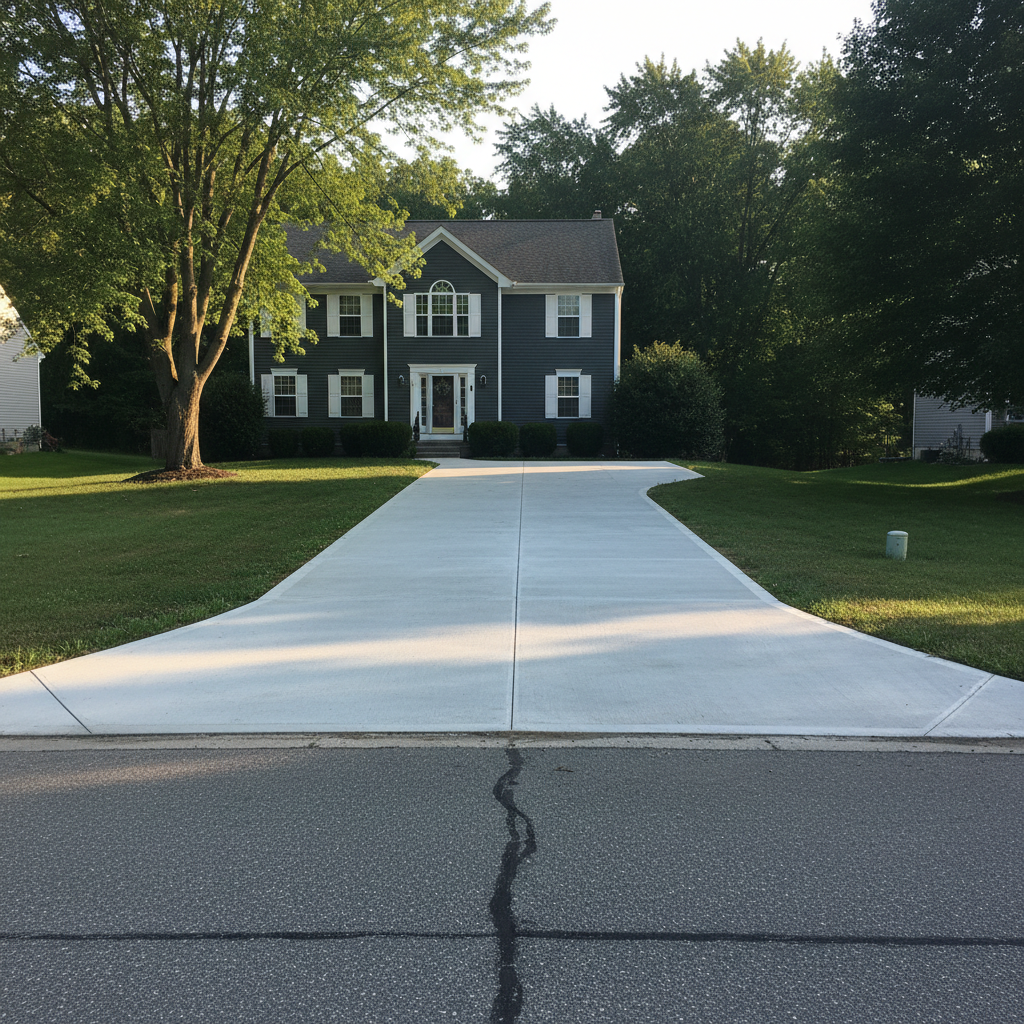
We pour driveways on a compacted gravel base, not straight over dirt, because a sub-base that moves is why driveways heave and crack in year two. We use a 4 to 6 inch slab with wire mesh or rebar depending on what's driving over it, and we saw-cut control joints within a day of the pour so the slab cracks where we tell it to. Give it seven days before you park a car on it.
Patios take less structural load than a driveway so we can play more with finish, broom, exposed aggregate, or a stamped pattern. We still pitch every patio away from the house, a quarter inch per foot, so water doesn't pool against your foundation. Expect about five days of cure before furniture goes back on it.
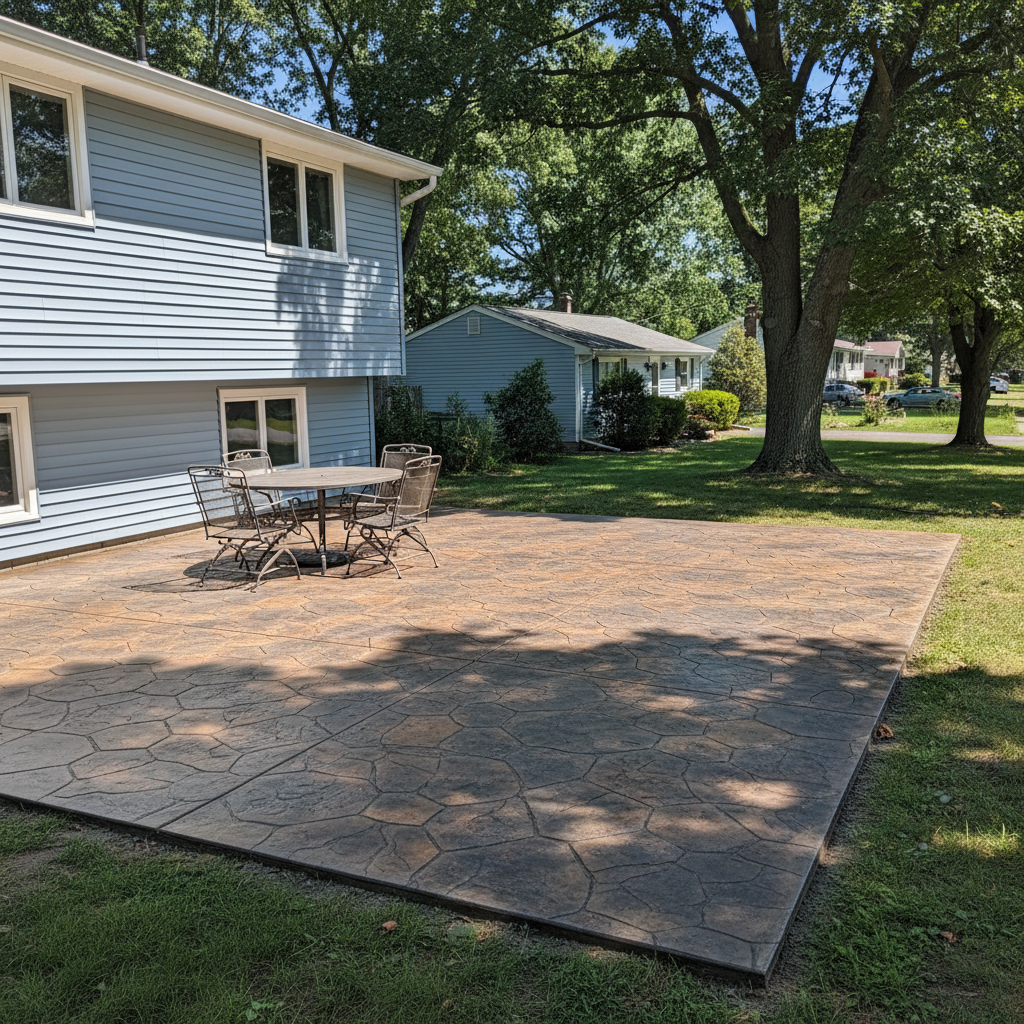
Stamped concrete gets you the look of flagstone or cobblestone without the per-piece labor of setting actual stone. Timing is everything, we stamp the pattern while the slab is still plastic, then seal it once it's cured so the color holds. Expect to reseal every two to three years in this climate to keep it from going dull.
Front stoops in the Bronx take a beating from salt and foot traffic, and that's usually what's eating the edges on an old set of steps. We form and pour new steps with rebar through the treads, not just mesh, because a cantilevered step without steel will eventually crack off at the nose. We can match an existing riser height if there's a railing or door threshold to work around.
If you've got a DOT violation notice for a cracked or raised sidewalk slab, we handle the removal and repour to spec so it passes inspection. New York requires a certain pitch and joint spacing on public sidewalks, and we've poured enough of them to know what the inspector is going to flag. We can usually get a single slab replacement done in a day.
Shed pads, garage slabs, small foundations, we dig to frost depth so the slab doesn't heave when the ground freezes. Clay soil around here holds water and moves more than sandy soil does, so we adjust the base thickness and drainage depending on what we hit when we dig.
Not every crack means the slab needs to come out. Hairline cracks from shrinkage we can route and fill, but a crack that's heaving or one side higher than the other usually means the sub-base failed and the section needs to be replaced. We'll tell you honestly which one you're looking at before we quote it.
We build block foundations, brick veneer and garden walls, laying each course level and tying back to the structure where it needs it. Bad mortar joints are usually why a wall starts to bow or spall, water gets in, freezes, and pushes the brick face off. We match mortar color and joint style on repair work so new brick doesn't stick out against old.
A retaining wall that fails is almost always a drainage problem, not a strength problem, water builds up behind it and pushes until something gives. We install drainage pipe and gravel backfill behind every wall over a couple feet tall, and we batter the wall back slightly so it leans into the hill. Taller walls need an engineer's stamp here and we'll tell you when yours does.
Tuckpointing means cutting out the old failed mortar joints and repacking them with new mortar, not just smearing caulk over the cracks. On older Bronx row houses the original lime mortar is softer than modern Portland cement mix, so using the wrong mortar can actually crack the brick face instead of the joint. We match mortar hardness to the age of the building.
Four steps, and no surprises in any of them.
You tell us what you want doing, we look at what is actually there, and we ask the awkward questions early.
In writing, itemised, free. If something might add cost later we flag it now rather than at the end.
Same crew throughout. We cover your floors, keep the dust down and tidy up before we leave each day.
You point out anything you are not happy with and we fix it before the invoice, not after.
Where we pour, repair, and do masonry work.
Questions that come up once a project actually gets going.
Describe the problem and we will tell you what it probably is. No obligation.